
Introduction
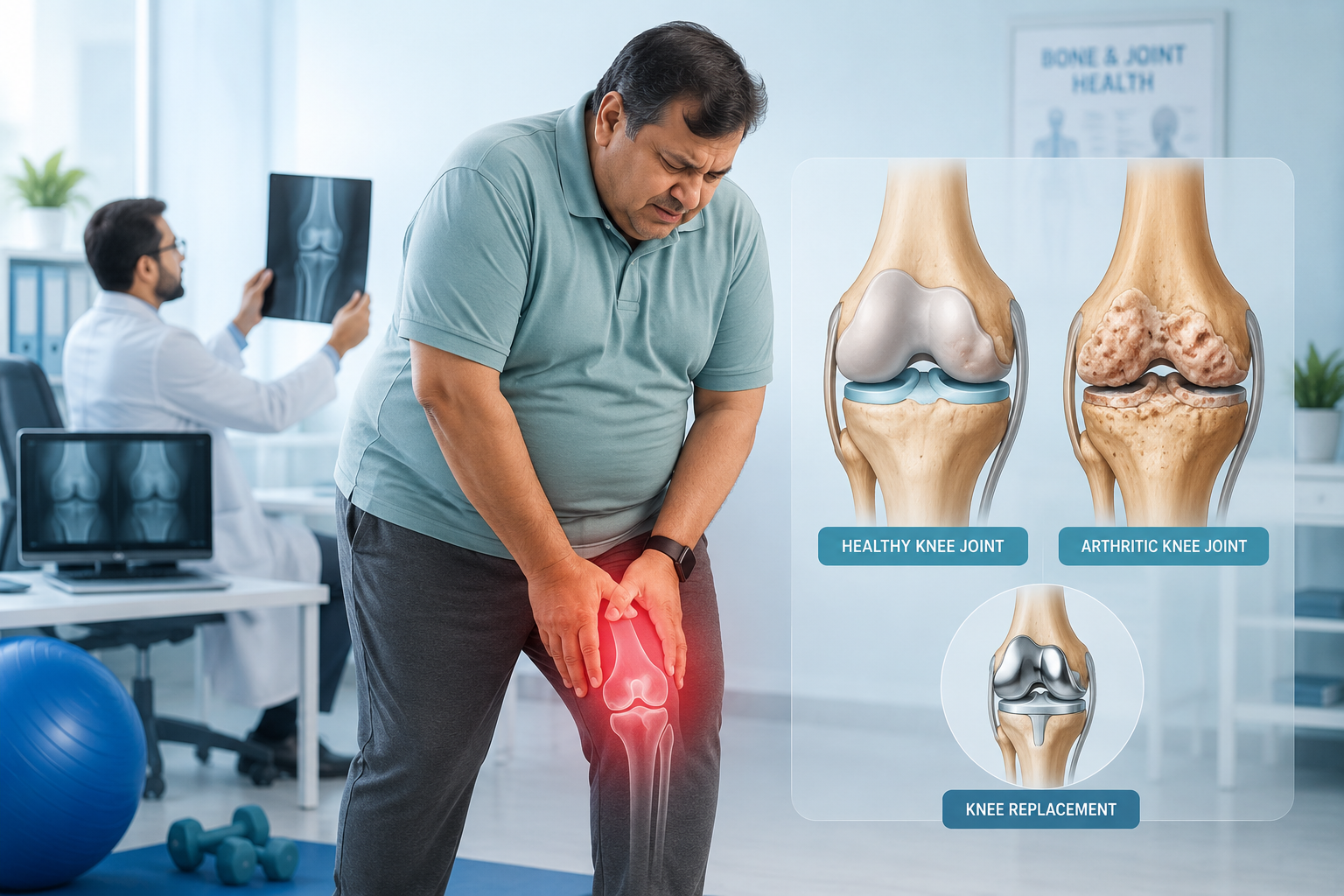
Obesity is one of the most significant factors affecting joint health, especially the knees. Excess body weight places continuous stress on weight-bearing joints, accelerating cartilage wear and increasing the risk of osteoarthritis. Over time, this can lead to severe knee pain and may eventually require knee replacement surgery.
Understanding how obesity impacts knee replacement outcomes is essential for better treatment planning. Patients should consult a trusted Orthopedic Clinic in New Delhi and an experienced Best Orthopedic Doctor in New Delhi to receive proper evaluation, risk assessment, and guidance for safe surgical outcomes.
How Obesity Affects Knee Joints
The knee joint is designed to support body weight and allow smooth movement. However, when excess weight is present, the pressure on the knee increases significantly.
For every extra kilogram of body weight, the knee experiences several times more pressure during walking or climbing stairs. This leads to:
- Faster cartilage breakdown
- Increased inflammation in the joint
- Reduced mobility
- Higher risk of osteoarthritis
- Early joint degeneration
Over time, this can make everyday activities painful and difficult.
When Knee Replacement Becomes Necessary
Knee replacement surgery is considered when:
- Severe arthritis causes constant pain
- Mobility becomes significantly limited
- Conservative treatments like medication and physiotherapy no longer help
- Quality of life is affected
However, in patients with obesity, careful evaluation is needed before planning surgery to ensure safety and long-term success.
Risks of Knee Replacement Surgery in Obese Patients
Obesity does not prevent knee replacement, but it can increase certain risks. These risks include:
1. Higher Surgical Complexity
Excess soft tissue can make the surgical procedure more technically challenging.
2. Increased Risk of Infection
Obesity is associated with a slightly higher risk of post-operative infection due to longer surgery time and healing challenges.
3. Delayed Wound Healing
Extra body weight can slow down the healing process after surgery.
4. Implant Stress
Higher body weight places more stress on the artificial joint over time.
5. Longer Recovery Period
Rehabilitation may take more time compared to patients with normal weight.
A detailed pre-surgical assessment at an Orthopedic Clinic in New Delhi helps in minimizing these risks through proper planning.
Benefits of Knee Replacement Despite Obesity
Even with obesity, knee replacement can provide significant benefits when properly managed:
- Long-term pain relief
- Improved mobility and independence
- Better quality of life
- Increased ability to perform daily activities
- Reduced dependency on pain medications
With expert care from the Best Orthopedic Doctor in New Delhi, outcomes can be highly successful.
Pre-Surgery Solutions for Better Outcomes
1. Weight Management
Even a moderate weight reduction can significantly reduce surgical risks and improve recovery outcomes.
2. Physiotherapy
Strengthening muscles around the knee helps support the joint.
3. Lifestyle Modifications
Healthy diet and low-impact exercises such as swimming or cycling are often advised.
4. Medical Optimization
Conditions like diabetes, hypertension, or thyroid disorders should be well-controlled before surgery.
These steps help prepare the body for a safer surgical experience.
Surgical Considerations in Obese Patients
Special precautions are taken during knee replacement surgery in obese individuals:
- Use of advanced surgical techniques
- Careful anesthesia planning
- Infection prevention measures
- Customized implant selection
- Post-operative monitoring
A skilled Best Orthopedic Doctor in New Delhi ensures that all these factors are carefully managed.
Recovery After Knee Replacement
Recovery depends on individual health and weight condition. In general:
- Early walking begins within 24–48 hours
- Physiotherapy starts soon after surgery
- Gradual improvement in mobility over weeks
- Full recovery may take a few months
Consistent rehabilitation is essential for long-term success.
Long-Term Solutions and Prevention
After surgery, maintaining a healthy lifestyle is important to protect the new joint:
- Maintain healthy body weight
- Follow a balanced diet
- Stay physically active with low-impact exercises
- Avoid high-stress activities on knees
- Attend regular follow-ups
These steps help extend the life of the knee implant.
Importance of Expert Consultation
Every patient is different, and obesity-related knee problems require personalized care. A proper evaluation at a trusted Orthopedic Clinic in New Delhi ensures accurate diagnosis and treatment planning.
The Best Orthopedic Doctor in New Delhi can assess:
- Joint condition
- Weight-related risks
- Surgical suitability
- Pre- and post-operative care needs
This ensures safer surgery and better long-term outcomes.
Conclusion
Obesity significantly impacts knee health and can increase the complexity of knee replacement surgery. However, with proper preparation, medical guidance, and lifestyle changes, successful outcomes are absolutely achievable.
Consulting a reputed Orthopedic Clinic in New Delhi and an experienced Best Orthopedic Doctor in New Delhi ensures that patients receive safe, effective, and personalized treatment. With the right approach, knee replacement surgery can restore mobility, reduce pain, and greatly improve quality of life—even in patients dealing with obesity.