
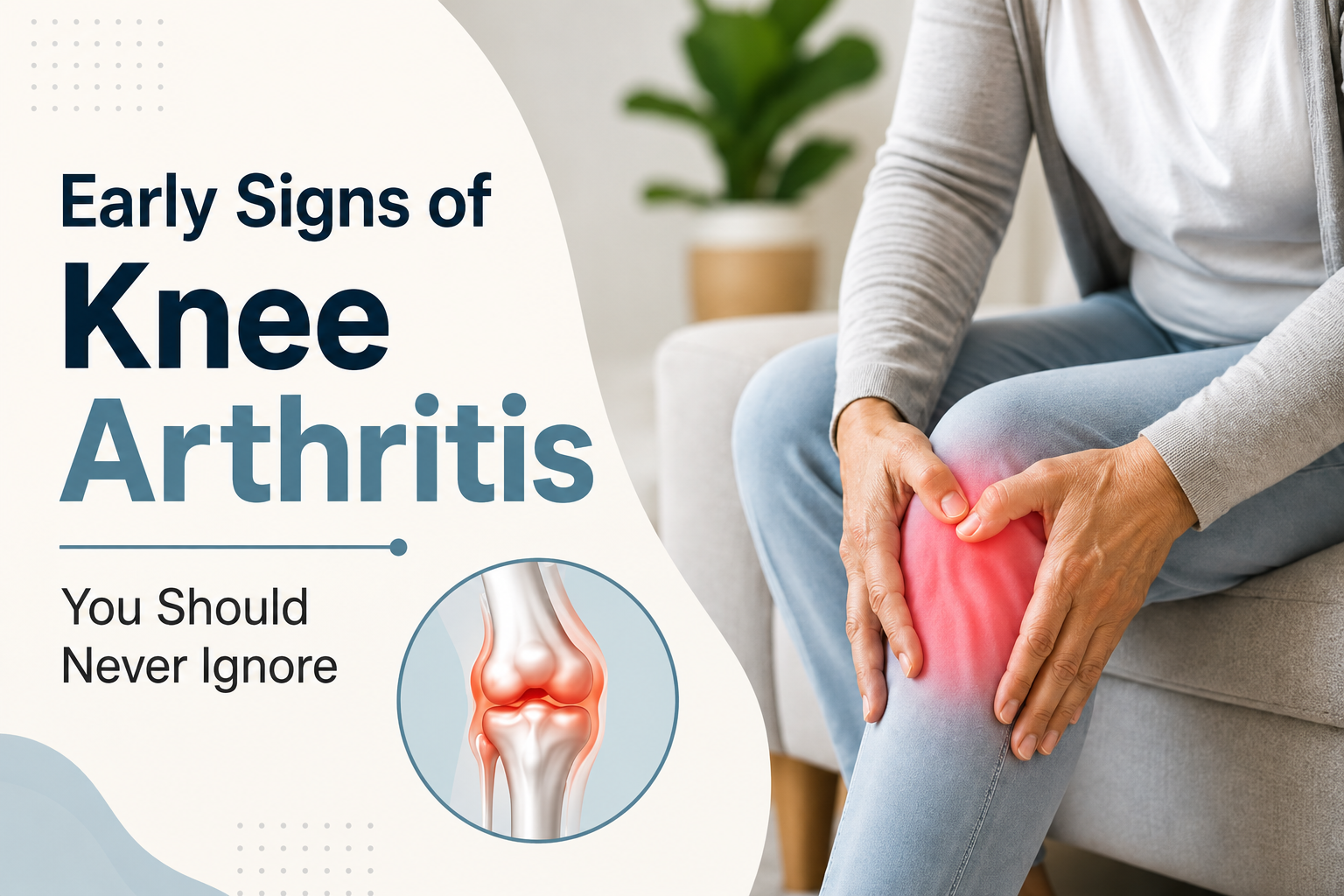
Introduction
Knee arthritis affects millions globally and is a leading cause of pain, reduced mobility and loss of independence, yet many people shrug off the first warning signs as “normal” aches.
While aging is a common cause, knee arthritis can strike at any age after an injury, from repetitive stress or due to genetic and metabolic factors. Catching symptoms early makes a huge difference because early intervention can slow joint damage, reduce pain and improve long-term function.
What is Knee Arthritis?
Knee arthritis describes inflammation and degeneration of the knee joint, where the cartilage that cushions the bones gradually thins or breaks down.
When cartilage wears away, bones rub against each other, causing pain, stiffness, swelling and reduced mobility.
The most common types of knee arthritis include:
- Osteoarthritis: Wear-and-tear breakdown of cartilage, commonly associated with aging.
- Rheumatoid Arthritis: An autoimmune disease that causes inflammation of the joint lining.
- Post-Traumatic Arthritis: Develops following injuries such as fractures, meniscus tears or ligament damage.
Why Does Early Detection Matter?
Arthritis is generally progressive. Without intervention, symptoms and structural damage tend to worsen over time.
Early diagnosis and management can:
- Slow disease progression
- Reduce pain and inflammation
- Preserve joint mobility and function
- Delay or reduce the need for surgery
- Maintain independence and quality of life
Early Signs of Knee Arthritis You Should Never Ignore
Persistent Knee Pain
One of the earliest warning signs is ongoing pain around the knee.
Early pain may:
- Develop gradually
- Occur after activity or prolonged standing
- Become worse toward the end of the day
- Persist despite adequate rest
If knee pain continues for several weeks, it should be medically evaluated.
Morning Stiffness
Stiffness after waking up or following prolonged sitting is common in early arthritis.
- Difficulty bending the knee
- Trouble getting out of bed
- Stiffness lasting 15–30 minutes or longer
- Symptoms returning after inactivity
Swelling and Warmth
Inflammation can cause swelling and a feeling of tightness around the knee.
- Puffiness around the joint
- A sensation of fullness
- Warmth when touching the knee
- Swelling after activity
Recurring swelling should always be assessed by a healthcare professional.
Crepitus (Cracking, Clicking or Grinding)
As cartilage wears away, movement may produce grinding, clicking or crunching sensations known as crepitus.
Occasional noises are not always concerning, but persistent grinding associated with pain may indicate arthritis.
Reduced Range of Motion
Arthritis can gradually limit knee movement.
- Difficulty kneeling
- Problems squatting
- Trouble climbing stairs
- Inability to fully straighten or bend the knee
Pain While Climbing Stairs or Walking on Slopes
The knee experiences greater stress when climbing stairs, walking downhill or standing up from a seated position.
Pain during these activities is often one of the earliest symptoms of knee arthritis.
Weakness or Instability
Joint changes can affect surrounding muscles and knee stability.
- Feeling that the knee may give way
- Episodes of buckling
- Reduced confidence while walking
- Difficulty walking on uneven surfaces
Instability can increase the risk of falls and further injury.
Start-Up Pain After Rest
Many people notice pain immediately after standing up following prolonged sitting or sleeping.
This “start-up pain” is a common symptom of early joint irritation.
Tenderness Around the Joint
The knee may become sensitive to touch, especially around the kneecap and joint line.
Weather-Related Flare-Ups
Many patients report increased stiffness and discomfort during cold weather or before rainfall.
Although scientific evidence is mixed, weather-related symptom changes are commonly observed in arthritis patients.
Risk Factors for Knee Arthritis
- Advancing age
- Obesity and excess body weight
- Previous knee injuries
- Repetitive occupational or sports-related stress
- Family history of arthritis
- Diabetes, gout and autoimmune diseases
When Should You See a Doctor?
Consult a healthcare professional if you experience:
- Persistent pain lasting several weeks
- Repeated swelling or warmth
- Difficulty walking
- Trouble climbing stairs
- Stiffness that limits daily activities
- Knee instability or frequent giving way
Early assessment can help preserve joint health and prevent progression.
How is Knee Arthritis Diagnosed?
Physical Examination
Your doctor will assess swelling, tenderness, stability and range of motion.
X-Rays
X-rays help identify joint space narrowing, bone spurs and structural changes associated with arthritis.
MRI Scan
MRI provides detailed images of cartilage, menisci, ligaments and other soft tissues.
It is particularly useful when injury or complex symptoms are suspected.
Joint Aspiration and Blood Tests
These tests may be recommended when infection, inflammatory arthritis or gout is suspected.
Treatment Approaches for Early Knee Arthritis
Lifestyle Measures
- Weight management
- Low-impact exercise such as walking, cycling and swimming
- Supportive footwear
- Activity modification
Physical Therapy
Physiotherapy focuses on strengthening the quadriceps, hip muscles and supporting structures around the knee.
Flexibility exercises help maintain mobility and improve function.
Medications
- Pain-relieving medications
- Anti-inflammatory drugs
- Topical NSAIDs for localized pain relief
Medications should always be used under medical supervision.
Supportive Devices
- Knee braces
- Knee straps
- Walking sticks during flare-ups
Injection Treatments
- Corticosteroid injections
- Hyaluronic acid injections
Discuss the benefits and risks of these treatments with your orthopedic specialist.
When Does Surgery Become Necessary?
Most patients respond well to conservative treatment. Surgery may be considered when severe pain and disability persist despite appropriate management.
Available options may include arthroscopy, osteotomy, partial knee replacement or total knee replacement depending on the severity of arthritis.
Practical Tips to Protect Your Knees
- Maintain a healthy body weight
- Follow a regular strengthening program
- Choose low-impact activities
- Avoid prolonged kneeling and squatting
- Wear supportive footwear
- Treat injuries promptly
Simple One-Week Starter Plan
Days 1–3
- 20–30 minutes of brisk walking or stationary cycling
- 10 minutes of gentle knee stretches
Day 4
- 3 sets of 10 chair squats
- 3 sets of 10 straight-leg raises per side
Days 5–7
- Repeat aerobic exercise
- Add calf and hamstring stretches
- Apply ice if painful flare-ups occur
Adjust exercise intensity according to pain levels and consult a physiotherapist for personalized guidance.
When to Seek Urgent Medical Attention
Seek immediate medical care if you experience:
- Severe swelling with redness and fever
- Sudden inability to move the knee after injury
- Acute severe pain with locking of the joint
Conclusion
Early knee arthritis often begins with mild symptoms that are easy to dismiss. Persistent pain, morning stiffness, swelling, crepitus, reduced movement and instability deserve prompt attention.
Early diagnosis and a combination of lifestyle changes, physiotherapy, supportive devices and appropriate medical treatments can slow progression, reduce pain and help maintain an active lifestyle.
If symptoms persist, consult an orthopedic specialist to develop a personalized treatment plan.
Frequently Asked Questions (FAQs)
1. What is usually the first sign of knee arthritis?
Persistent knee pain and morning stiffness are often the earliest symptoms.
2. Can knee arthritis occur in young adults?
Yes. Previous injuries, obesity, genetics and inflammatory diseases can contribute to earlier onset arthritis.
3. Does walking help knee arthritis?
Moderate walking can improve mobility and strengthen muscles around the knee, provided excessive strain is avoided.
4. Can knee arthritis be cured?
There is currently no guaranteed cure for degenerative arthritis, but early treatment can effectively manage symptoms and slow progression.
5. When should I see a doctor for knee pain?
You should seek medical advice if pain, swelling, stiffness or instability persists for several weeks or interferes with daily activities.