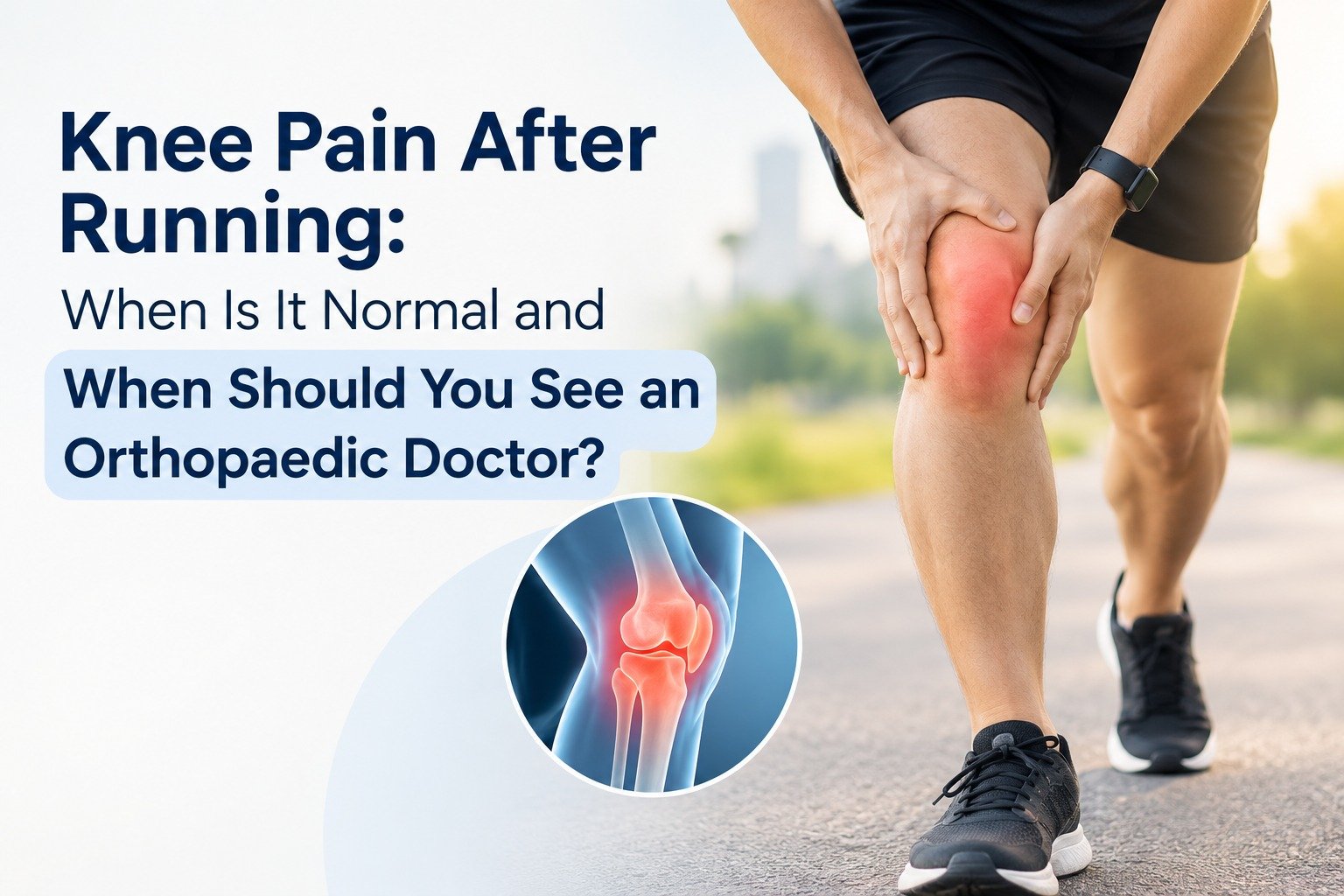
Running is one of the simplest ways to stay active, improve fitness and maintain a healthy lifestyle. However, if you regularly experience knee pain after running, it can make even a short workout uncomfortable. Some runners notice mild soreness after increasing their distance, while others experience pain during running, swelling, stiffness or discomfort while climbing stairs. Not every episode of knee pain means there is a serious injury. Sometimes, it may be related to overuse, suddenly increasing running intensity or inadequate recovery. However, persistent or worsening pain should not be ignored because knee symptoms can also occur with conditions involving the kneecap, tendons, ligaments, meniscus or joint. Understanding the possible cause of knee pain while running can help you decide when rest and activity modification may be appropriate and when you should consult an orthopaedic specialist.
Is Knee Pain After Running Normal?
Mild muscle soreness after starting a new exercise routine can be common. However, pain in the knee itself should not simply be considered a normal part of running. Running places repetitive load on the knee. If you suddenly increase your running distance, pace or frequency, the tissues around the knee may not have enough time to adapt. Poor recovery, unsuitable footwear, changes in training surfaces and muscle weakness can also contribute to running-related knee symptoms. Common running-related knee pain may occur around or behind the kneecap and can range from a dull ache to sharper pain. The guidance recommends avoiding running when the knee is painful and seeking medical assessment if symptoms persist. The important question is not only "Does my knee hurt after running?" but also "How long does it last, how severe is it and is it affecting my normal activities?"
What Causes Knee Pain After Running?
There are several possible reasons for knee pain after running. The exact cause cannot be determined from symptoms alone and may require a clinical examination.
1. Runner's Knee or Patellofemoral Pain
One of the commonly discussed causes of pain in runners is patellofemoral pain syndrome, often referred to as runner's knee. It usually causes pain around or behind the kneecap. Symptoms may become more noticeable during running, squatting, climbing stairs or after sitting for a long time. Patellofemoral pain can have several contributing factors, including changes in activity levels and reduced strength or control of the muscles around the hip and thigh.
2. Increasing Running Too Quickly
Starting to run after a long break or suddenly increasing mileage can put additional stress on the knee. For example, increasing both your running distance and speed within a short period may not give your muscles, tendons and joints sufficient time to adapt. A gradual increase in running volume, combined with adequate recovery, can help reduce unnecessary stress on the knee.
3. Muscle Weakness or Imbalance
The muscles around the hips, thighs and lower legs help control movement during running. If certain muscle groups are weak or are not functioning efficiently, the knee may experience additional load. This does not necessarily mean that muscle weakness is the only cause of pain, but it can be one factor considered during an orthopaedic or physiotherapy assessment.
4. Tendon Problems
Repetitive running can sometimes irritate a tendon around the knee. Pain related to tendinopathy may become more noticeable with repetitive activities such as running, jumping or climbing stairs. The location and nature of the pain can help an orthopaedic specialist determine whether the symptoms may involve a tendon or another structure.
5. Meniscus or Ligament Injury
Not all knee injuries are caused by gradual overuse. A sudden change in direction, twisting movement, fall or sports injury can damage structures such as the meniscus or ligaments. Symptoms such as swelling, instability, difficulty straightening the knee, locking or a popping sensation after an injury deserve medical assessment. NHS guidance lists giving way, inability to straighten the knee and popping associated with an injury among symptoms that can occur with ligament, tendon or meniscus injuries.
6. Existing Joint Problems
Knee pain while running can sometimes be associated with an underlying joint condition. Arthritis, previous injuries or cartilage-related problems may become more noticeable with activities that put greater demand on the knee. If you have recurring pain or a history of knee injury, it is better to understand the underlying cause rather than repeatedly running through the pain.
Where Does the Knee Hurt When You Run?
The location of your pain can provide useful clues, although it cannot confirm a diagnosis.
- Pain around or behind the kneecap: May occur with patellofemoral pain.
- Pain below the kneecap: May involve structures such as the patellar tendon.
- Pain along the inner or outer side of the knee: Can have several causes, including meniscus or ligament-related problems.
- Pain with swelling after an injury: May require assessment for an internal knee injury.
- Pain associated with locking or giving way: Should not be ignored.
A proper examination is important because different knee conditions can produce similar symptoms.
When Is Knee Pain After Running a Warning Sign?
You should consider seeing an orthopaedic doctor if your knee pain is persistent, repeatedly returns or interferes with everyday activities. You should seek medical attention sooner if you experience:
- Significant swelling after running or an injury
- Severe or worsening knee pain
- Inability to put weight on the affected leg
- Difficulty moving or straightening the knee
- Knee locking
- Repeated giving way or instability
- A significant injury or fall
- A sudden popping sensation followed by pain or swelling
- Redness, warmth or fever along with knee pain
These symptoms can indicate a problem that requires professional evaluation rather than simply continuing exercise.
Should You Stop Running If Your Knee Hurts?
If running causes knee pain, continuing to push through it may not be the best approach. The NHS specifically advises not running when you have knee pain and recommends getting the problem assessed if it does not settle. Instead, consider temporarily reducing or stopping the activity that triggers the pain. Depending on the cause, an orthopaedic specialist or physiotherapist may recommend a gradual rehabilitation programme. This does not necessarily mean that you have to stop running permanently. The goal is to identify the cause, manage the problem appropriately and return to activity safely when appropriate.
How Is Knee Pain After Running Diagnosed?
When you visit an orthopaedic specialist in Delhi NCR for knee pain, the evaluation may begin with a detailed discussion about your symptoms.
Your doctor may ask:
- When did the pain start?
- Does it occur during or after running?
- Where exactly is the pain located?
- Did you recently increase your running distance or speed?
- Was there a fall, twist or sports injury?
- Is there swelling?
- Does the knee lock or give way?
- Have you had a previous knee injury?
A physical examination can help assess knee movement, stability, tenderness and muscle function. Depending on your symptoms and examination findings, your doctor may decide whether imaging or additional tests are appropriate. Not every case of knee pain requires an MRI or surgery.
Treatment for Knee Pain After Running
Treatment depends on the underlying cause, severity of symptoms and your activity goals.
Activity Modification
Temporarily reducing activities that increase pain may allow irritated tissues to settle. Your doctor can advise you about when and how to return to running.
Physiotherapy and Rehabilitation
A structured rehabilitation programme may include exercises to improve strength, flexibility, balance and movement control. For some forms of knee pain, strengthening the muscles around the knee and hip can be an important part of recovery.
Medication
Depending on the diagnosis and your individual health circumstances, your doctor may recommend medication for pain or inflammation. Medicines should be used according to professional advice, particularly if you have other medical conditions or take other medicines.
Bracing or Support
In selected cases, a knee brace, support or other aid may be considered. Whether this is useful depends on the underlying problem.
Surgical Treatment
Surgery is not automatically required for running-related knee pain. However, certain injuries involving structures such as the meniscus or ligaments may require specialist treatment, particularly when symptoms are significant or do not respond to appropriate non-surgical management. The appropriate treatment should be based on an individual evaluation rather than assuming that every knee injury requires surgery.
How Can Runners Prevent Knee Pain?
While not every running injury can be prevented, certain habits may help reduce avoidable strain on the knees.
Increase Running Gradually
Avoid sudden increases in distance, pace or training frequency. Give your body time to adapt to changes in training.
Warm Up Before Running
A proper warm-up can prepare your muscles and joints for activity. A few minutes of brisk walking or gentle movement before running can be useful.
Choose Appropriate Running Shoes
Running shoes should be comfortable and appropriate for your activity. If your shoes are significantly worn or unsuitable for your running needs, replacing them may be worth considering.
Include Strength Training
Strengthening the muscles involved in running can support movement and overall physical performance.
Give Your Body Time to Recover
Rest and recovery are part of training. Running through persistent pain may make it harder to identify whether an injury is developing.
Pay Attention to Repeated Symptoms
If knee pain returns every time you run, don't simply keep adjusting your training around the pain. Recurring symptoms deserve proper assessment.
When Should You See an Orthopaedic Doctor in Delhi NCR?
If knee pain after running is persistent, worsening or affecting your ability to walk, exercise or perform daily activities, consulting an orthopaedic specialist can help identify the underlying cause. For runners and active individuals in Delhi NCR, an orthopaedic evaluation can be particularly useful when knee pain is accompanied by swelling, instability, locking, reduced movement or a previous sports injury. A specialist can assess whether the symptoms are related to overuse, runner's knee, tendon problems, meniscus injury, ligament injury or another condition and recommend treatment based on the diagnosis.
Conclusion
Occasional muscle soreness after a new workout is different from persistent knee pain after running. Pain that keeps returning, becomes worse with activity or is accompanied by swelling, locking or instability should not be ignored. The good news is that many running-related knee problems can be managed with appropriate diagnosis, activity modification, rehabilitation and other treatments when necessary. If your knee hurts every time you run, instead of simply pushing through the pain, consider getting it evaluated by an experienced orthopaedic doctor in Delhi NCR. Identifying the cause early can help you make informed decisions about treatment and your return to running.
Frequently Asked Questions
1. Why does my knee hurt after running?
Knee pain after running can have several causes, including overuse, sudden increases in training, patellofemoral pain, tendon problems, previous injuries or other knee conditions. A clinical examination is needed to determine the specific cause.
2. Is the runner's knee in a serious condition?
Runner's knee, commonly used for patellofemoral pain, can cause pain around or behind the kneecap, particularly during running, stairs or squatting. Persistent symptoms should be evaluated rather than ignored.
3. Should I stop running if my knee hurts?
If running causes knee pain, it is generally advisable to stop or modify the activity that aggravates the symptoms and seek appropriate medical advice if the pain persists.
4. When should I see an orthopaedic doctor for knee pain?
You should consider an orthopaedic consultation if pain persists, repeatedly returns, affects daily activities or is associated with swelling, locking, instability, difficulty bearing weight or an injury.
5. Can knee pain after running be treated without surgery?
Depending on the cause, many cases can be managed with activity modification, rehabilitation, physiotherapy and other non-surgical approaches. Treatment depends on the individual diagnosis.
6. Where can I get knee pain treatment in Delhi NCR?
If you have persistent knee pain, consulting an experienced orthopaedic specialist in Delhi NCR can help determine the underlying cause and appropriate treatment options.