A sports injury does not always mean surgery. Whether you are a professional athlete, a regular gym-goer, a runner or someone who plays sports occasionally, an injury can immediately raise an important question: “Will I need surgery to recover?” The answer depends on the type, severity and location of the injury, along with your age, activity level, joint stability, overall health and goals for returning to sport. Many sports injuries, including several sprains, strains, tendon problems and selected partial ligament injuries, can improve with appropriate non-surgical sports injury treatment. This may involve activity modification, medication when appropriate, bracing, physiotherapy, progressive strengthening and a structured return-to-sport programme. However, some injuries particularly those involving significant instability, complete structural damage, displaced fractures or persistent symptoms may require surgery. For people searching for sports injury treatment in Delhi NCR, understanding the available treatment options can help you make a more informed decision with an orthopaedic specialist.
Can Sports Injuries Heal Without Surgery?
Yes, many sports injuries can be treated successfully without surgery, but this does not apply to every injury. Non-surgical treatment is often considered when the injured structure is stable and has a reasonable potential to recover with appropriate protection and rehabilitation.
Common examples include:
- Mild to moderate muscle strains
- Many ankle sprains
- Selected ligament sprains
- Tendon irritation and some tendinopathies
- Some overuse injuries
- Certain partial soft-tissue injuries
- Some stable joint-related injuries
The key point is that non-surgical treatment does not simply mean resting until the pain disappears. A proper conservative treatment plan usually involves controlling symptoms initially and then progressively restoring movement, strength, balance, coordination and sport-specific function.
What Determines Whether You Need Surgery?
An orthopaedic specialist usually considers several factors before recommending surgery.
1. Type of Injury
A simple muscle strain is very different from a complete ACL tear, displaced fracture or major tendon rupture.
The structure involved can significantly influence the treatment approach.
2. Severity of the Injury
A mild sprain may respond well to rehabilitation, while a severe tear causing joint instability may require a different approach.
3. Joint Stability
If an injured joint repeatedly gives way or remains unstable despite rehabilitation, surgery may sometimes be considered.
4. Your Activity and Sports Goals
Treatment decisions can also depend on what you want to return to. The requirements of a recreational walker are different from those of someone who wants to return to competitive football, basketball or running.
5. Response to Rehabilitation
If symptoms and function improve with an appropriate non-surgical programme, surgery may not be necessary. On the other hand, persistent pain, instability, locking or functional limitation may require further evaluation.
What Does Non-Surgical Sports Injury Treatment Involve?
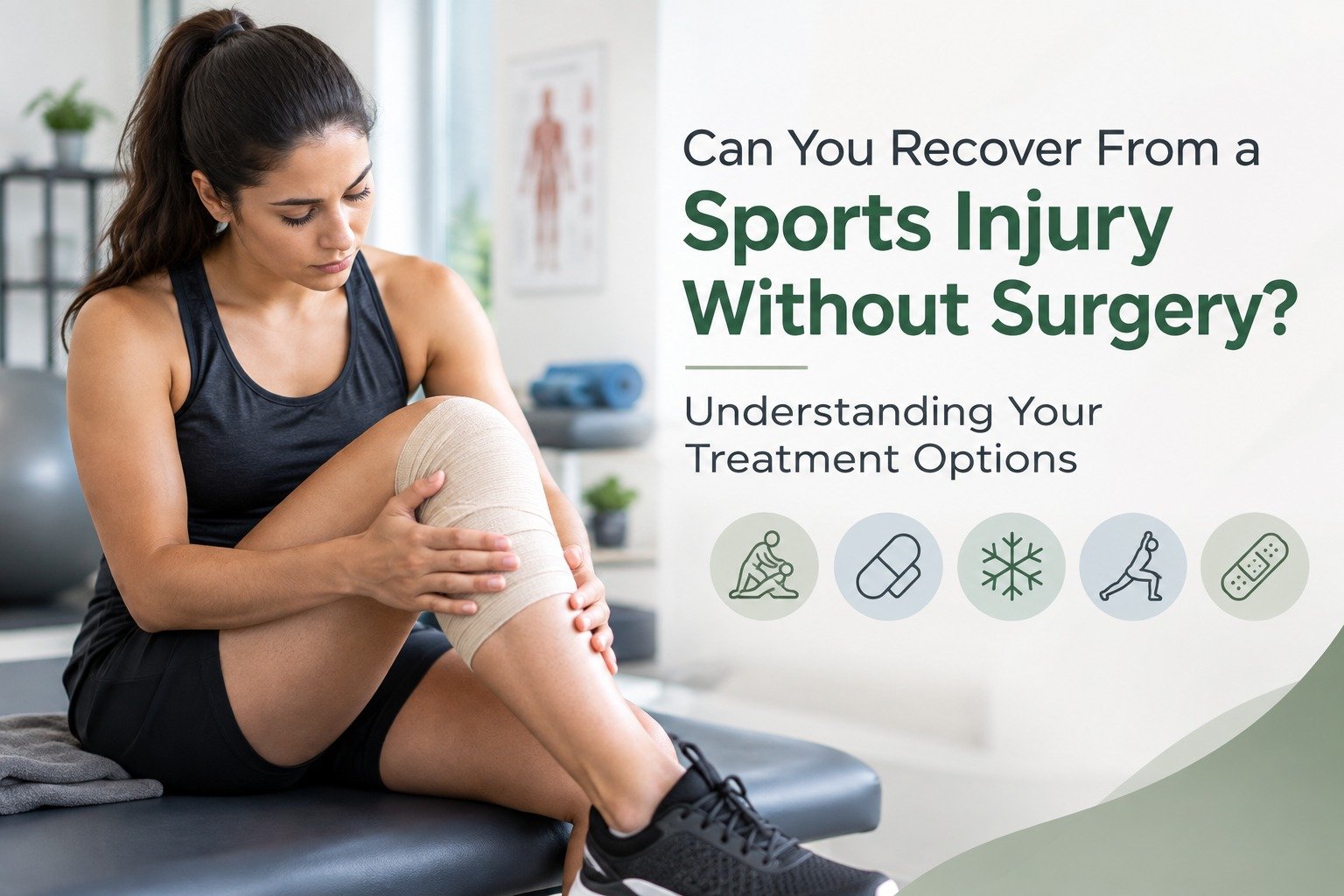
Conservative treatment is not a single treatment. It is usually a combination of approaches selected according to the injury.
Activity Modification
One of the first steps is often reducing or temporarily stopping activities that aggravate the injury. This does not necessarily mean complete inactivity. For example, an athlete with a knee injury may be able to perform certain low-impact activities while avoiding running, jumping or twisting movements until the joint is ready. The goal is to protect the injured tissue without unnecessarily losing overall fitness.
Physiotherapy and Rehabilitation
Physiotherapy is one of the most important components of non-surgical sports injury recovery.
Depending on the injury, rehabilitation may focus on:
- Restoring range of motion
- Reducing stiffness
- Improving muscle strength
- Building joint stability
- Improving balance and coordination
- Correcting movement patterns
- Developing sport-specific strength
- Gradually increasing activity levels
A structured rehabilitation programme is generally progressed in stages rather than returning immediately to full activity.
Bracing or Taping
For selected injuries, a brace, support or taping may provide additional stability while the injured tissue recovers. This can be particularly useful for certain ligament injuries or joints that need temporary support. However, braces should not be considered a substitute for rehabilitation. The appropriate type and duration of support depend on the specific injury.
Medicines for Pain and Inflammation
Depending on the injury and the individual's medical history, a doctor may recommend medication to manage pain or inflammation. Medication should be used according to medical advice, particularly if you have other health conditions or take other medicines.
Progressive Strength Training
Pain may improve before an injured joint or muscle has regained its full strength. This is why returning to sport simply because the pain has reduced can sometimes be premature. Progressive strengthening helps rebuild the capacity of the injured area to handle increasing physical demands.
Sport-Specific Rehabilitation
The final stages of rehabilitation should reflect the activity you want to return to. For a runner, this may involve gradually increasing running load. For a football player, rehabilitation may eventually include acceleration, deceleration, direction changes and controlled sport-specific drills. The objective is not simply to become pain-free but to regain the physical capacity required for your sport.
Can an ACL Injury Heal Without Surgery?
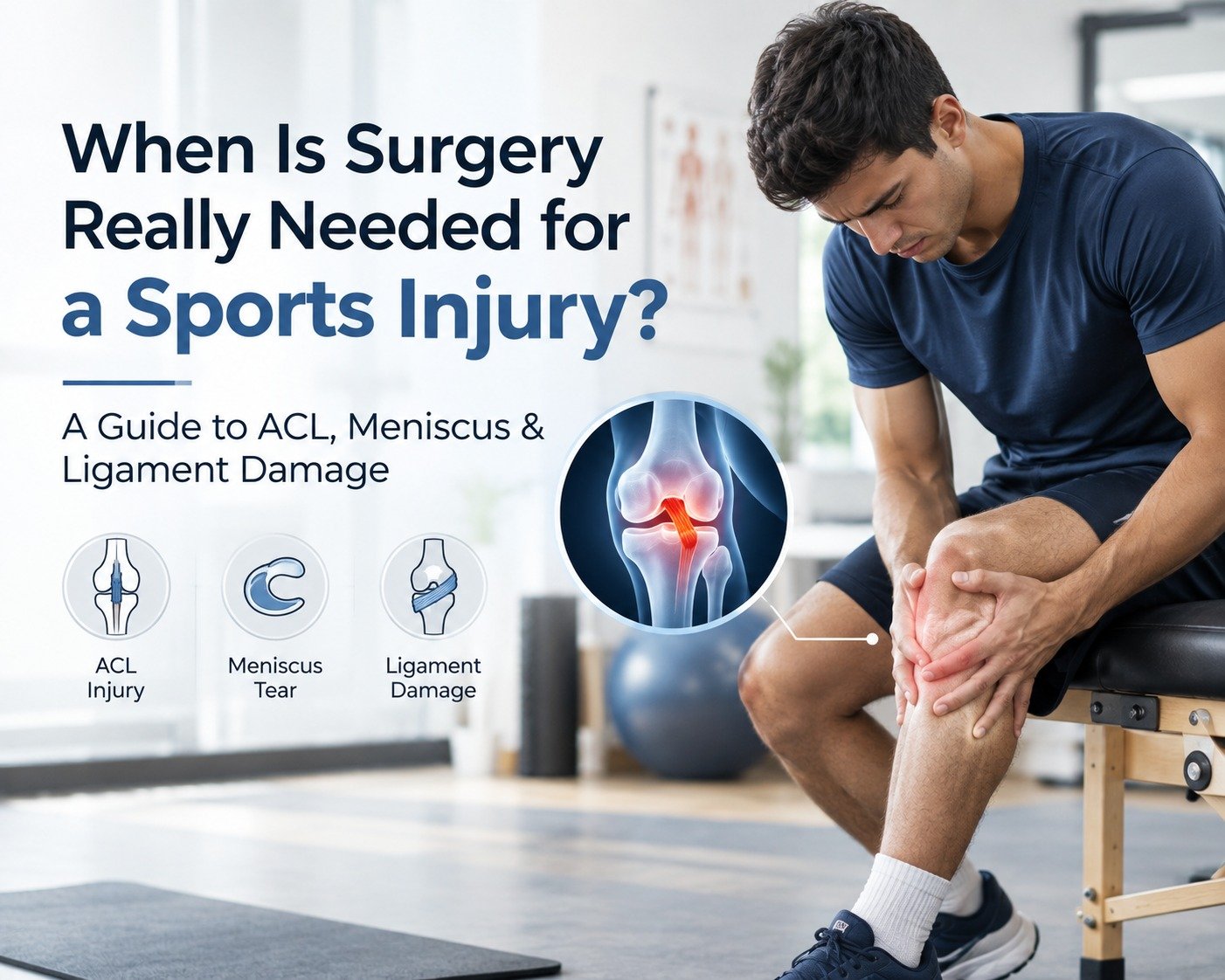
This is one of the most common questions after a knee sports injury. The answer depends on the type and severity of the ACL injury, knee stability, symptoms and the person's activity goals. Some ACL injuries may be managed initially with structured rehabilitation, particularly when the knee is functionally stable and the individual's activity demands allow it. However, a complete ACL tear associated with significant instability especially in someone who wants to return to high-demand pivoting sports may require surgical reconstruction. An ACL decision should therefore not be based on the MRI report alone. Clinical examination, symptoms, stability and functional goals all matter. Patients should discuss their individual situation with an orthopaedic or sports-injury specialist before deciding between rehabilitation and surgery.
What About Meniscus Tears?
Not every meniscus tear requires surgery. The treatment depends on factors such as the location and pattern of the tear, symptoms, age, activity level and whether the knee is locking or becoming unstable. Some meniscus injuries may improve with activity modification and structured rehabilitation. However, symptoms such as persistent locking, significant mechanical symptoms or ongoing pain despite appropriate conservative treatment may require further evaluation and, in selected cases, arthroscopic treatment. The aim is to choose the least invasive treatment that can safely restore function.
Can Shoulder Sports Injuries Recover Without Surgery?
Some shoulder injuries can also be managed without surgery.
Depending on the diagnosis, treatment may include:
- Activity modification
- Physiotherapy
- Strengthening of the shoulder and surrounding muscles
- Movement retraining
- Medication when appropriate
- Selected injections
However, recurrent shoulder dislocation, significant instability, certain large tendon tears or injuries that continue to limit function despite rehabilitation may require surgical assessment. A correct diagnosis is particularly important because several shoulder conditions can cause similar symptoms.
When Is Surgery More Likely to Be Recommended?
While many injuries can be treated conservatively, surgery may become appropriate when the injury cannot safely or predictably recover with non-surgical treatment. Surgical evaluation may be considered in situations such as:
- Significant joint instability
- Certain complete ligament tears
- Recurrent joint dislocation
- Locked or mechanically problematic meniscus injuries
- Major tendon ruptures
- Displaced or unstable fractures
- Significant cartilage damage
- Persistent symptoms despite an appropriate rehabilitation programme
- An injury preventing a safe return to required sports activity
The decision should be individualised rather than based solely on the name of the injury. Sports-medicine treatment in Delhi NCR commonly combines non-surgical care, rehabilitation and surgical options according to the patient's injury and functional goals.
Why You Should Not Return to Sports Too Early
One of the biggest mistakes after a sports injury is returning to activity simply because the pain has improved. Pain is only one part of recovery.
Before returning to full sport, the injured area may need to regain:
- Adequate strength
- Joint mobility
- Balance
- Coordination
- Endurance
- Movement control
- Confidence
- Sport-specific ability
Returning too quickly can place excessive stress on healing tissues and may increase the risk of reinjury. A progressive return-to-sport programme can help determine when it is appropriate to increase training intensity.
How Is a Sports Injury Diagnosed?
Before deciding whether surgery is necessary, an orthopaedic specialist needs to understand what has actually been injured.
Evaluation may include:
Medical History
The doctor may ask how the injury occurred, whether you heard a pop, how quickly swelling developed and which movements cause pain.
Physical Examination
The joint may be assessed for:
- Swelling
- Tenderness
- Range of motion
- Muscle strength
- Joint stability
- Movement patterns
Imaging
Depending on the suspected injury, imaging may include an X-ray, ultrasound or MRI. X-rays are useful for evaluating bones and fractures, while MRI can provide detailed information about structures such as ligaments, tendons, cartilage. Importantly, imaging should be interpreted alongside the patient's symptoms and clinical examination.
Sports Injury Treatment in Delhi NCR: Why Early Assessment Matters
If you are looking for sports injury treatment in Delhi NCR, it is important not to assume that every injury needs either complete rest or immediate surgery. The first step should be an accurate diagnosis. A sports injury specialist can determine whether your condition is suitable for conservative management, whether you need further imaging or whether surgical treatment should be considered. Early assessment can also help prevent athletes from repeatedly playing through pain or returning to sport before the injured structure has recovered sufficiently.
This is especially important when there is:
- Persistent swelling
- Severe pain
- Difficulty bearing weight
- Loss of movement
- Repeated joint instability
- A popping sensation during injury
- Recurrent injury
- Numbness or weakness
- Pain that continues despite rest
How Long Does Non-Surgical Sports Injury Recovery Take?
There is no single recovery timeline for every sports injury. A mild sprain may improve over a relatively short period, while tendon injuries, ligament injuries and more significant soft-tissue problems can require a longer rehabilitation programme.
Recovery depends on:
- Injury severity
- Tissue involved
- Age and general health
- Previous injuries
- Rehabilitation consistency
- Sport or activity demands
- How gradually activity is increased
The goal should not be to return as quickly as possible. The goal is to return safely and with enough strength and control to perform the activity again.
Can PRP or Other Injections Replace Surgery?
Injections such as platelet-rich plasma (PRP) may be considered for selected sports-related conditions, particularly certain tendon or joint problems. However, PRP is not a universal alternative to surgery and does not repair every type of structural injury. Whether an injection has a role depends on the diagnosis, symptoms and available evidence for that particular condition. It should also not replace appropriate rehabilitation.
Conclusion
Yes, you can recover from many sports injuries without surgery but not every injury should be treated without it. The right treatment depends on the injury, its severity, joint stability, your activity level and how you respond to rehabilitation. For many patients, a well-planned non-surgical approach involving activity modification, physiotherapy, strengthening and gradual return to sport can provide effective recovery. For more severe injuries, surgery may offer a more appropriate route to restoring stability and function. If you have sustained a sports injury and are unsure whether you need surgery, an assessment by an experienced orthopaedic and sports injury specialist in Delhi NCR can help determine the most appropriate treatment path. The goal should not simply be to reduce pain, it should be to restore movement, strength, stability and confidence so you can return to the activities you enjoy safely.
Frequently Asked Questions
1. Can all sports injuries be treated without surgery?
No. Many mild or moderate sports injuries can improve with non-surgical treatment, but severe ligament tears, major tendon ruptures, unstable fractures, recurrent dislocations and some mechanically problematic joint injuries may require surgery.
2. How do I know if my sports injury needs surgery?
Persistent instability, locking, significant structural damage, recurrent symptoms or failure to improve after appropriate rehabilitation may indicate the need for a surgical evaluation.
3. Can an ACL tear heal without surgery?
Some ACL injuries can be managed with structured rehabilitation, depending on the injury and the patient's stability and activity goals. Complete tears with significant instability may require reconstruction, particularly for people returning to high-demand sports.
4. Can a meniscus tear recover without surgery?
Some meniscus tears can be managed conservatively with activity modification and rehabilitation. Persistent locking, mechanical symptoms or ongoing pain may require further assessment.
5. How long does it take to recover from a sports injury without surgery?
Recovery time varies significantly according to the type and severity of the injury. A structured rehabilitation programme and gradual return to activity are generally more important than following a fixed timeline.
6. When should I see an orthopaedic specialist after a sports injury?
Seek medical evaluation if you have significant swelling, severe pain, difficulty bearing weight, joint instability, restricted movement, a popping sensation, recurrent symptoms or pain that does not improve with appropriate rest.