
Introduction
Knee pain can make even the simplest daily activities feel challenging. Whether it's climbing stairs, walking to the market, getting up from a chair, or enjoying your favourite hobby, persistent knee discomfort can significantly affect your quality of life.
While medications, physiotherapy, weight management and lifestyle modifications often provide relief, there comes a point when these treatments may no longer be effective. If you've been living with chronic knee pain, it's important to recognize the warning signs that may indicate the need for knee replacement surgery.
In this blog, we'll discuss the 10 key signs you may need knee replacement surgery, who is an ideal candidate, and when it's time to consult an orthopedic specialist.
What Is Knee Replacement Surgery?
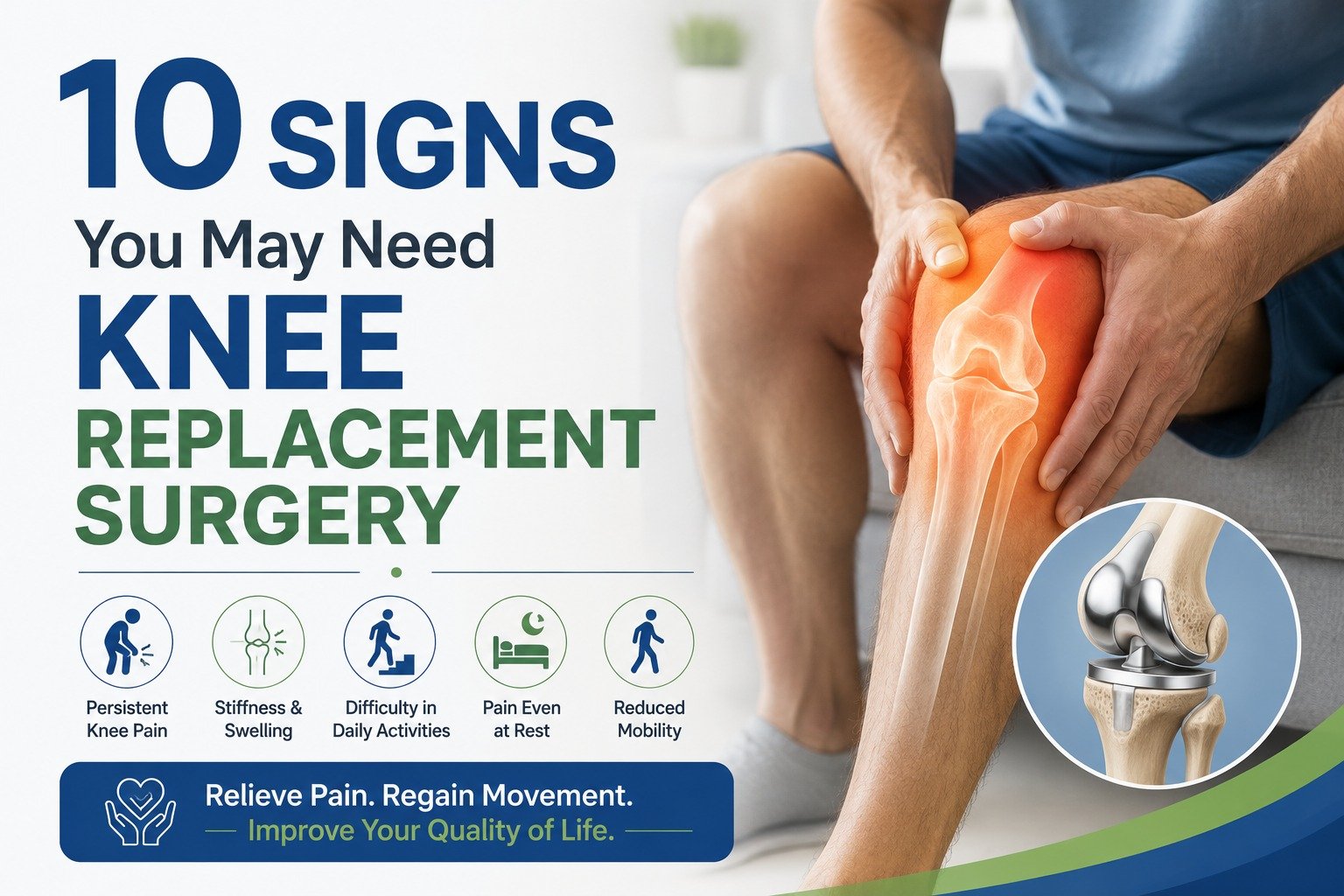
Knee replacement surgery, also known as knee arthroplasty, is a procedure in which damaged cartilage and bone in the knee joint are replaced with artificial implants. The goal is to reduce pain, restore mobility and improve overall function.
The surgery is commonly recommended for patients with severe osteoarthritis, rheumatoid arthritis, post-traumatic arthritis or advanced joint degeneration that has not responded to conservative treatment.
1. Persistent Knee Pain That Doesn't Improve
Persistent pain may indicate advanced joint damage.
Occasional knee pain after physical activity is normal. However, if your pain persists for several months despite medication, physiotherapy, rest or home remedies, it may indicate severe joint damage.
You should consider medical evaluation if:
- Pain occurs daily.
- Pain interferes with routine activities.
- Home treatments no longer provide relief.
- You rely on painkillers regularly.
Persistent pain is often one of the earliest indicators that conservative treatment may no longer be sufficient.
2. Difficulty Walking or Standing
Reduced mobility often signals worsening arthritis.
If walking even short distances becomes exhausting or painful, it may be a sign that the knee joint has significantly deteriorated.
- Needing frequent breaks while walking.
- Difficulty standing for more than 10–15 minutes.
- Limping while walking.
- Using a walking stick or support regularly.
Reduced mobility often progresses gradually, making everyday tasks increasingly difficult.
3. Severe Morning Stiffness
Long-lasting stiffness may suggest advanced arthritis.
Many people experience mild stiffness after waking up. However, stiffness lasting longer than 30 minutes every morning may indicate advanced arthritis.
- Difficulty bending or straightening the knee.
- Feeling "locked" after sitting.
- Reduced flexibility.
- Pain with the first few steps.
Persistent stiffness often suggests significant cartilage loss.
4. Knee Pain During Rest or at Night
Pain at rest often indicates severe joint degeneration.
Initially, arthritis pain occurs during movement. As the condition worsens, pain may continue even while resting.
- Pain while sitting.
- Pain that interrupts sleep.
- Nighttime aching.
- Difficulty finding a comfortable sleeping position.
5. Swelling That Keeps Returning
Repeated swelling may indicate chronic inflammation.
Occasional swelling after heavy activity is common. However, repeated or persistent swelling may indicate ongoing inflammation inside the knee joint.
- Puffy knee.
- Warmth around the joint.
- Fluid buildup.
- Swelling that returns after treatment.
Chronic inflammation gradually damages the remaining cartilage.
6. Difficulty Climbing Stairs
Weight-bearing activities become increasingly painful.
One of the earliest functional signs of severe knee arthritis is pain while climbing stairs.
- Sharp pain while climbing.
- Weakness while descending stairs.
- Needing support from railings.
- Fear of falling.
7. Bowed or Deformed Knee
Visible changes in alignment should not be ignored.
As arthritis progresses, the knee may gradually lose its normal alignment.
- Bow-legged appearance.
- Knock knees.
- Uneven walking pattern.
- Joint instability.
A deformed knee places additional stress on surrounding muscles and joints, worsening pain over time.
8. Limited Range of Motion
Loss of flexibility can reduce independence.
Healthy knees allow smooth bending and straightening. Damaged joints often lose flexibility.
- Inability to fully bend the knee.
- Difficulty squatting.
- Trouble sitting cross-legged.
- Reduced flexibility during exercise.
9. Non-Surgical Treatments No Longer Work
Conservative treatment may no longer be enough.
Before recommending surgery, orthopedic specialists usually suggest:
- Physiotherapy.
- Weight loss.
- Pain medications.
- Anti-inflammatory medicines.
- Knee braces.
- Lifestyle modifications.
- Joint injections.
If you've tried these treatments consistently without lasting improvement, knee replacement may become the most effective option.
10. Your Daily Life Is Constantly Affected
Quality of life matters.
Perhaps the most important sign is when knee pain begins controlling your lifestyle.
Ask yourself:
- Have you stopped exercising?
- Do you avoid social gatherings because of pain?
- Is shopping becoming difficult?
- Do household chores feel exhausting?
- Are you unable to enjoy activities you once loved?
When pain significantly reduces your independence and quality of life, it's time to discuss surgical options with an orthopedic surgeon.
Common Conditions That Lead to Knee Replacement
Several medical conditions may eventually require knee replacement surgery, including:
- Osteoarthritis.
- Rheumatoid arthritis.
- Post-traumatic arthritis.
- Severe cartilage damage.
- Advanced knee deformity.
- Chronic joint degeneration.
An orthopedic evaluation, along with X-rays or MRI scans, helps determine the extent of damage and the most suitable treatment.
Who Is a Good Candidate for Knee Replacement?
You may be considered a suitable candidate if you:
- Have severe knee pain that limits daily activities.
- Experience chronic swelling and stiffness.
- Have advanced arthritis visible on X-rays.
- Do not respond to medications or physiotherapy.
- Have difficulty walking or climbing stairs.
- Experience pain even while resting.
Age alone is not the deciding factor. Many patients in their 50s, 60s and even younger individuals with severe joint damage may benefit from surgery.
Benefits of Knee Replacement Surgery
Modern knee replacement surgery offers excellent outcomes for most patients.
- Significant pain relief.
- Improved mobility.
- Better balance and stability.
- Easier walking and stair climbing.
- Improved sleep due to reduced pain.
- Greater independence.
- Enhanced quality of life.
- Long-lasting implant performance with proper care.
With advances in surgical techniques and rehabilitation, many patients return to an active lifestyle within a few months.
Recovery After Knee Replacement
First Few Days
- Walking with support under medical supervision.
- Pain management and gentle exercises.
- Hospital discharge based on recovery progress.
First 6 Weeks
- Regular physiotherapy.
- Improved walking ability.
- Gradual return to daily activities.
3 Months
- Increased strength and flexibility.
- Better balance and confidence.
- Significant reduction in pain.
6–12 Months
- Continued improvement in mobility.
- Maximum functional recovery for most patients.
Following your surgeon's advice and rehabilitation plan plays a key role in achieving the best results.
How Can You Delay Knee Replacement?
If your arthritis is in its early stages, you may be able to delay surgery by:
- Maintaining a healthy body weight.
- Exercising regularly with low-impact activities.
- Strengthening the muscles around the knee.
- Managing chronic health conditions.
- Wearing supportive footwear.
- Avoiding repetitive high-impact activities.
- Following your doctor's treatment plan.
However, delaying surgery for too long despite severe symptoms may result in worsening deformity and reduced mobility.
When Should You See an Orthopedic Specialist?
Schedule an orthopedic consultation if:
- Knee pain lasts longer than a few weeks.
- Walking becomes difficult.
- You experience repeated swelling.
- Pain wakes you up at night.
- Your knee appears deformed.
- Daily activities become increasingly challenging.
- Medications and physiotherapy are no longer effective.
Early diagnosis allows your doctor to recommend the most appropriate treatment before the condition worsens.
Conclusion
Living with constant knee pain is not something you have to accept as a normal part of aging. While many people benefit from non-surgical treatments, persistent pain, stiffness, swelling and reduced mobility may indicate that knee replacement surgery is the best option to restore your independence and improve your quality of life.
If you're experiencing several of the warning signs discussed above, don't ignore them. Consulting an experienced orthopedic specialist can help you understand your condition, explore available treatment options and make an informed decision about your joint health. With timely care and the right treatment plan, you can return to a more active, comfortable and pain-free life.
Frequently Asked Questions (FAQs)
1. How do I know if I need knee replacement surgery?
If you have severe knee pain, stiffness, swelling, difficulty walking and non-surgical treatments no longer provide relief, you should consult an orthopedic surgeon for an evaluation.
2. Is knee replacement only for elderly patients?
No. While it is more common in older adults, younger patients with severe joint damage or arthritis may also be suitable candidates.
3. How long does it take to recover from knee replacement surgery?
Most patients resume daily activities within 6–12 weeks, while full recovery and maximum improvement may take 6–12 months.
4. How long does a knee replacement implant last?
Modern knee implants typically last 15–20 years or longer, depending on the patient's activity level, weight and overall health.
5. Can I walk normally after knee replacement?
Yes. With proper rehabilitation and physiotherapy, most patients regain comfortable walking and improved mobility after recovery.
6. Can knee replacement surgery relieve pain completely?
Most patients experience significant pain relief and improved quality of life after surgery, although the outcome depends on individual health, rehabilitation and adherence to post-operative care.